
FAQs
Creatine is the fuel your cells run on, and as you age you begin to run short.
Brain, not just muscle: Creatine powers cellular energy in the brain. That's the half nobody tells you.
The gap that widens after 40: Women carry 70-80% lower creatine stores than men, and as oestrogen starts to drop, creatine production drops even lower.
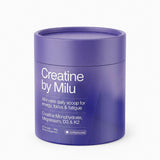
Full, clinical stack: 5g of creatine - the amount actually used in research - plus magnesium, vitamin D3 and K2 for the complete daily dose, not a single ingredient.
One scoop a day, in whatever you're already drinking.
Any drink: Unflavoured, so it disappears into coffee, tea, water or a smoothie. (We love our creatine with smoothies!)
Same time each day: Consistency matters far more than timing. Pick a moment you won't forget.
Keep your water up: Creatine pulls water into your muscles, so drink a little more than usual.
No.
Creatine supports lean tone and strength - not size. It doesn't work like that on its own.
Bloating comes from the old "loading" method, where you'd take several big doses a day for a week. You don't do that here. At one scoop, the water creatine draws goes into your muscle cells and brain, not under your skin.
Yes.
Daily is exactly how it's meant to work.
Creatine is one of the most studied supplements in existence, with decades of safety data behind this dose. The kidney myth has been tested repeatedly and proven to be false.
If you have kidney disease or you're on medication, check with your doctor.
No.
That's the whole point of it.
Energy, mental clarity and mood come from your cells and your brain using creatine - no workout required. That happens whether you exercise or not.
Move your body as well and you get strength on top. But you don't need to earn the rest of it.
Most people notice improvements around week three.
Creatine isn't a stimulant, so there's no day-one buzz. It builds up in your body gradually - usually steadier energy first, then a clearer head.
That's how you know it's not a cheap trick, it's a real, researched supplement for long term benefits, not a quick buzz.
Yes.
And you may not need as many of them.
Each scoop already contains 200mg of magnesium bisglycinate plus vitamin D3 and K2, so if you're buying those separately, those bottles can go. It sits fine alongside a multivitamin, omega-3, iron or collagen.
If you're on prescription medication, check with your doctor or pharmacist first.
Yes.
And you may have more to gain than most.
Creatine is found naturally in meat and fish, so if you eat little or none of either, your stores are likely lower to begin with. Ours is made by fermentation, not from animal sources, so it suits vegetarians and vegans.
Starting lower isn't a bad thing here. It usually means there's more room to fill,
No.
One scoop a day is the whole protocol.
Loading is an old sports-research habit, and it's where nearly every bloating story comes from. 5g daily fills your stores within three to four weeks — slower, but far gentler on your stomach.
If you've tried creatine before and felt puffy, that was the loading phase, not the creatine.
Creatine on its own is only half the job.
Milu is a full stack, not a single ingredient. Creatine at the full research dose, magnesium bisglycinate, vitamin D3 and K2 — chosen to work together and cover what creatine alone can't.
Building that yourself means four separate tubs, four la bels to check, four things to remember every morning, and four times you're paying for packaging and shipping. Bought individually it costs noticeably more than one tub of Milu, and that's before you've worked out which forms and doses are worth buying.
This is one scoop, third-party tested, so the label matches what's inside.